
In the Media
- News,
What Really Goes Into Safe Roof Lifting Project
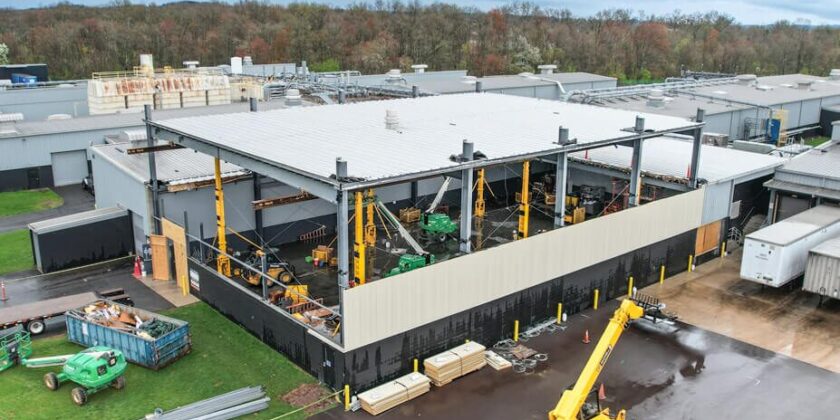
At Wolfe House & Building Movers, we have spent decades doing something most people never realize is possible. We lift roofs. Whole roofs. On warehouses, commercial facilities, industrial buildings, historic structures, and everything in between. When a building owner tells us they need more clear height, more cubic footage, or a fresh lease on life for an aging structure, we bring in our jacking towers, unified jack machines, and our crew, and we raise the roof safely and cleanly.
If you have been researching roof lifting services, you probably already know the appeal. It is faster than demolition. It is greener than new construction. It could sidestep zoning headaches, sky-high tax reassessments, and the pain of relocating operations. But you may also be wondering what actually goes into a safe roof lift, and how to pick a partner who can pull it off without putting your building, your team, or your timeline at risk.
Let us walk you through it.
Why Roof Lifting Makes Sense in the First Place
Before we get into the how, let us talk about the why. Older warehouses and commercial buildings were often designed with ceiling heights that made sense at the time and feel painfully cramped today. Modern racking systems, taller trucks, updated mechanical equipment, and evolving tenant expectations all demand more vertical space.
You have a few options when you outgrow your ceiling. You can move to a bigger facility, which is expensive and disruptive. You can demolish and rebuild, which means truckloads of debris headed to the landfill and months or years of downtime. Or you can raise the roof you already have and keep everything else in place.
Raising the roof lets you double or even triple the usable cubic footage inside your existing footprint. You keep your foundation, your walls (with extensions), your columns, and your roof structure. You avoid new construction taxes. You reuse most of the materials that are already there. And you get back to business faster than you would with a rebuild.
That is the appeal. Now let us talk about what makes it safe.
The Components of a Safe Roof Lift
Roof lifting looks dramatic from the outside, but the real work is in the details. A safe lift depends on four things coming together at the same time.
Precise Engineering and Planning
Every roof is different. Its size, shape, weight distribution, age, materials, and structural condition all influence how it should be lifted. Before we place a single jack, we assess the building, review drawings, coordinate with your general contractor, and map out exactly where our jacking towers need to go and how much load each one will carry.
Skipping this step is where a roof lifting project could go sideways. Uneven load calculations lead to uneven lifts, and uneven lifts put stress on the roof structure that it was never designed to absorb.
The Right Equipment for the Job
You cannot safely lift a warehouse roof with off-the-shelf equipment. We use the Buckingham Unified Hydraulic Jacking System paired with heavy-duty jacking towers that get placed beside each existing column, lagged to the concrete floor, and clamped to the girder above. That connection between the tower and the structure is what turns a collection of jacking towers into a temporary support system while the roof is lifted and the new columns and walls are installed.
The towers do the heavy work. Our proprietary SmartJack™ program does the thinking.
Unified Lifting
Here is where safety really lives. We do not want a roof to tilt, twist, or flex during a lift, and yet weight is never distributed evenly across the surface. Some jacks are carrying more load than others. Some sections of roof have heavier equipment or thicker structural members overhead.
Our unified jacking system regulates the flow of hydraulic oil to each tower so that every jack extends at the same rate, regardless of the weight variations across the roof or the total square footage involved. Whether we are lifting a compact commercial building or an 11,000 square foot warehouse, the roof rises as one unit. That is what protects the integrity of the roof structure.
Securing the Roof at Height
Lifting is only half the story. Once the roof reaches the desired elevation, it needs to stay there safely while a local contractor extends the walls and columns. We use cable tie-downs to protect against wind lift during that window, keeping the roof stable no matter what the weather decides to do. When the extended walls and columns are finished, we use the same unified jacking system in reverse to lower the roof gently onto its new perch.
Why Building Owners Choose Wolfe House & Building Movers
Roof lifting is a niche discipline within an already niche industry. There are not many companies in North America that can do it well, and even fewer that can do it at scale. Here is why owners, contractors, architects, and property managers keep bringing their roof raising projects to us.
Decades of hands-on experience
We have been in the structural moving and lifting business for generations. Our team has raised roofs on warehouses, commercial facilities, historic hotels, banks, bus depots, and one-of-a-kind industrial buildings. When something unusual comes up mid-project, and something always does, we have almost certainly seen a version of it before.
Proprietary technology that removes guesswork
The Buckingham Unified Jacking System with SmartJack™ is not something we bolted on. We built it because a unified lift is the single biggest factor in a safe outcome, and we wanted a system we could trust on every project.
A crew that treats safety as culture
Our people plan carefully, communicate constantly, and follow procedures that have been refined across thousands of lifts. Nothing about a roof raise is casual.
Real answers about cost
One of the first questions we get is what a roof lift will cost. Honest answer: it depends on the size and shape of the roof and how high we are lifting it. What we can promise is a detailed, custom estimate based on your specific building, not a vague ballpark. In most cases, roof lifting comes in less expensive than the alternatives once you factor in downtime, and demolition.
Nationwide reach
We serve most states east of the Mississippi River plus Iowa and Missouri, along with California, Washington, Oregon, Idaho, Nevada, Utah, and Arizona. For historic restoration and large masonry projects, we work nationwide.
Ready to Talk About Your Roof?
If you have a building that could use more clear height, we would love to hear about it. Give us a call at 610-488-1020 or reach out through our contact form. We will ask the right questions, gather the information we need, and put together a plan that lifts your roof safely, protects your investment, and gets your facility ready for whatever comes next.